
Department of Genetic Engineering

Department of Genetic Engineering

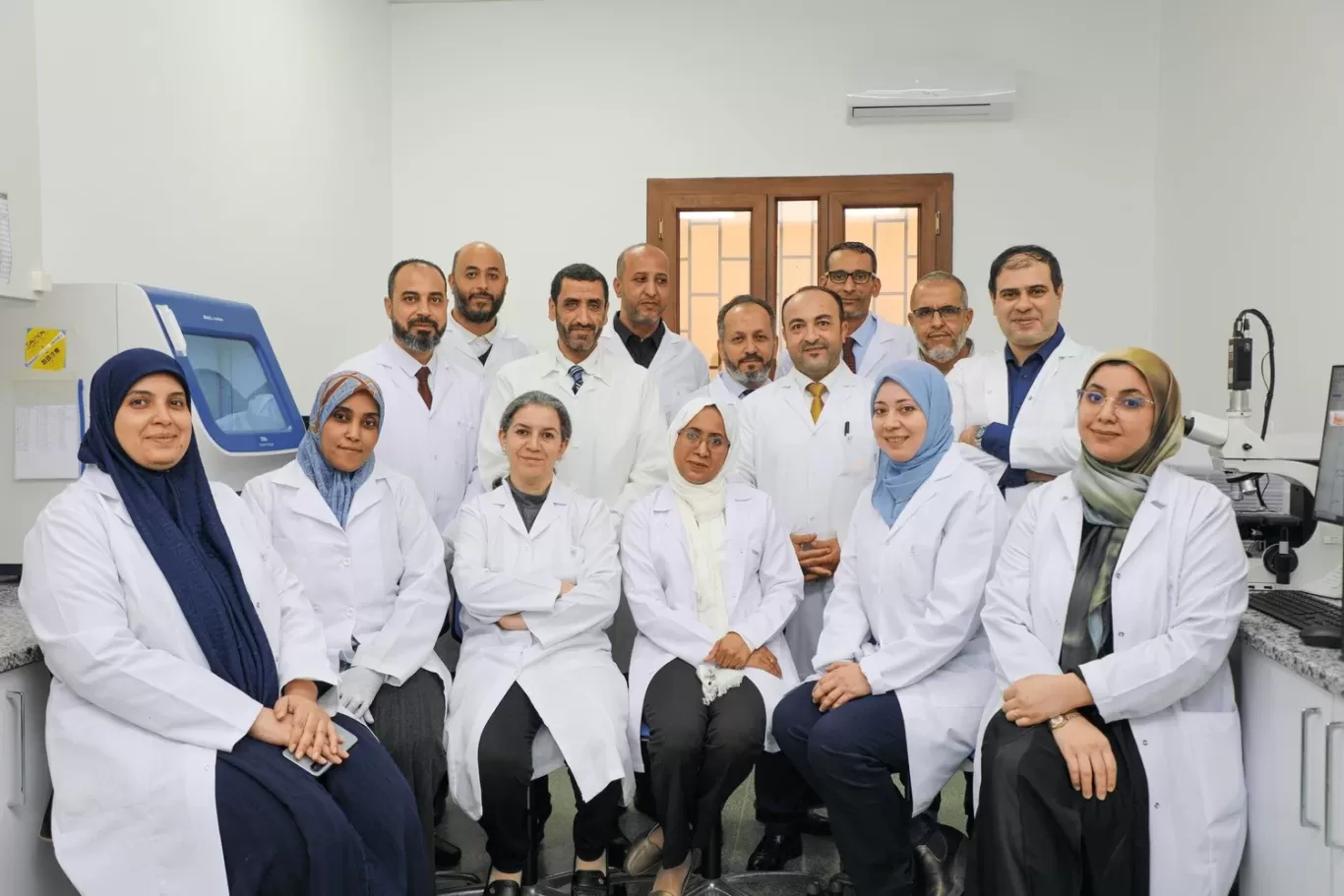
The Genetic Engineering Department was established in 2001 as the first department in Libya dedicated to genetic engineering and molecular genetics. Today, it stands as one of the most significant divisions of the Libyan Biotechnology Research Center (LBRC). The department contributes to scientific research, training programs, and continuing education, in addition to supervising postgraduate students from various Libyan universities. Its activities aim to advance national expertise in molecular biology, biotechnology, and genetic research, supporting the Center’s mission of achieving scientific excellence and innovation.

Research Projects

New Genetic Advances in Combating Childhood Glaucoma

Primary Congenital Glaucoma (PCG) is expected to be relatively common in Libya; however, no genetic screening programs currently exist, and data regarding its prevalence and associated pathogenic mutations remain limited.
This research aims to investigate variants in the CYP1B1 gene—specifically in exons II and III—as essential steps toward understanding the genetic basis of the disease.

The ultimate medical goal of the study is to support the development of a genetic screening program that enables early diagnosis and timely treatment of affected children before irreversible vision loss occurs. The study also seeks to explore the correlation between genetic mutations and disease severity.

Study Objectives

  1. Collect demographic data and medical histories of patients diagnosed with Primary Congenital Glaucoma.

  2. Identify mutations in exons II and III of the CYP1B1 gene in affected patients and their family members.

Prevalence of Genetic Mutations in Exon 10 of the CFTR Gene Among Cystic Fibrosis Patients in Libya

Cystic fibrosis is an autosomal recessive genetic disease that is increasingly being identified in various populations, including Libya. It is caused by mutations in the CFTR gene located on chromosome 7, which encodes a protein essential for regulating salt and water balance in many organs. The most common mutation is ΔF508, which leads to protein misfolding and results in severe clinical symptoms such as lung disease, pancreatic insufficiency, male infertility, and liver complications. Globally, over 2,000 mutations in the CFTR gene have been identified, but their distribution varies across populations. In Libya, there is a significant lack of molecular data on this disease, making genetic research an urgent priority.

This study aims to investigate the prevalence of genetic mutations—particularly the ΔF508 mutation—in exon 10 of the CFTR gene among patients with cystic fibrosis in Libya. The objectives include estimating the frequency of these mutations and examining their association with disease severity. The findings of this study may contribute to improved genetic counseling, more accurate diagnosis, and better access to modern therapies, such as CFTR modulator treatments, in Libya.

Cancer Prognostication Project

Led by Professor Adam Elzagheid, our department’s Cancer Prognostication Project is dedicated to advancing precision oncology through the molecular profiling of colorectal and breast cancers. This multidisciplinary initiative focuses on the clinical significance of a diverse panel of biomarkers, including invasive markers like MMP25 and critical oncogenic drivers such as KRAS and BRAF. A core component of our work involves evaluating the comprehensive Mismatch Repair (MMR) panel—MLH1, PMS2, MSH2, and MSH6—to identify microsatellite instability and guide immunotherapy decisions.

We are proud to integrate Master’s students into the heart of this research. Under expert supervision, our graduate researchers contribute to IHC staining, data analysis, and clinicopathological correlations, gaining hands-on experience in molecular pathology while helping to map the unique genetic landscape of cancer in the Libyan population. Through this project, we aim to bridge the gap between laboratory discovery and improved patient outcomes in regional healthcare.

The Breast Cancer Genomics Landscape in Libya

This strategic research pillar, led by Prof. Inas Alhudiri, focuses on decoding the unique genetic architecture of breast cancer within the Libyan population. By utilizing cutting-edge genomic technologies, this project aims to identify population-specific mutations that contribute to hereditary risk and disease progression.

We believe that the future of Libyan healthcare lies in our students. Master’s and PhD candidates are essential contributors to every stage of our projects—from complex bioinformatics and NGS data analysis to clinical correlation and IHC staining. Their work not only advances our understanding of cancer but also trains a new generation of scientists equipped with global-standard genomic skills.