asaedya

Author: asaedya

World Health Organization Delegation Visits the Libyan Biotechnology Research Center

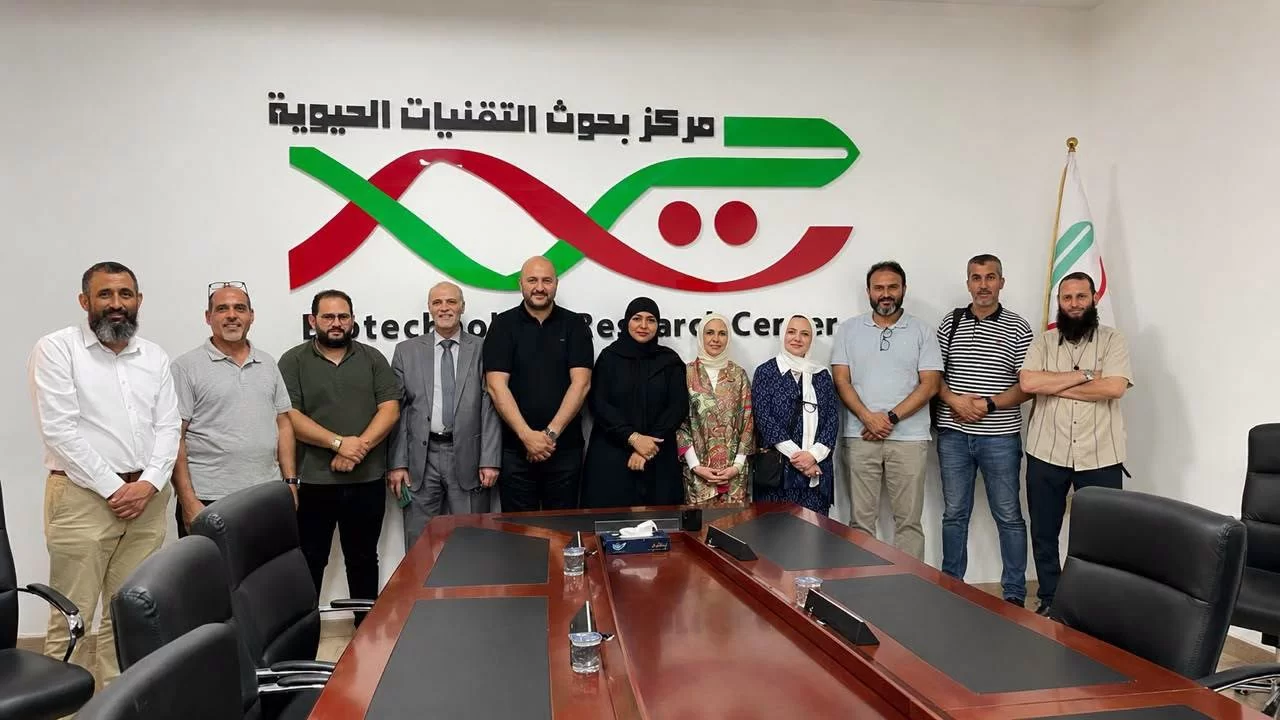
The Libyan Biotechnology Research Center (LBTRC) welcomed a delegation from the World Health Organization (WHO) at its headquarters in Tripoli, Libya.

The delegation was received by Prof. Faisal Abdulazim Al-Abdali, Director-General of the Libyan Authority for Scientific Research, and Prof. Adam Ibrahim Elzagheid, Director-General of the Libyan Biotechnology Research Center.

The WHO delegation was headed by Professor Arash Rashidian, MD, PhD, a distinguished expert in health policy and health systems research. Professor Rashidian leads the WHO Regional Office for the Eastern Mediterranean’s work on evidence-informed policymaking, health information systems, digital health, research promotion, governance, and knowledge sharing.

With more than 25 years of experience in health policy and health systems development across numerous countries, Professor Rashidian has held several prominent academic and international positions. He previously served as Vice-Chair of the WHO Guideline Review Committee and led the research and knowledge management pillar of the WHO response management team in the Eastern Mediterranean Region during the COVID-19 pandemic. He is also the Executive Editor of the Eastern Mediterranean Health Journal, the flagship publication of the WHO Regional Office for the Eastern Mediterranean.

His academic appointments include Affiliate Professor in the Department of Health Metrics Sciences at the University of Washington and Professor of Health Policy at Tehran University of Medical Sciences, currently on unpaid leave.

The visit provided an opportunity to strengthen communication and explore avenues for collaboration between the Libyan scientific research sector and the World Health Organization, particularly in areas related to scientific research, health systems development, innovation, and capacity building.

The Libyan Biotechnology Research Center reaffirms its commitment to fostering international partnerships and advancing scientific research to support public health and sustainable development in Libya.

Libyan Biotechnology Research Center (LBTRC)
Scientific Research for a Healthier Future
International Participation in Quality Assessment of Olive Oil.

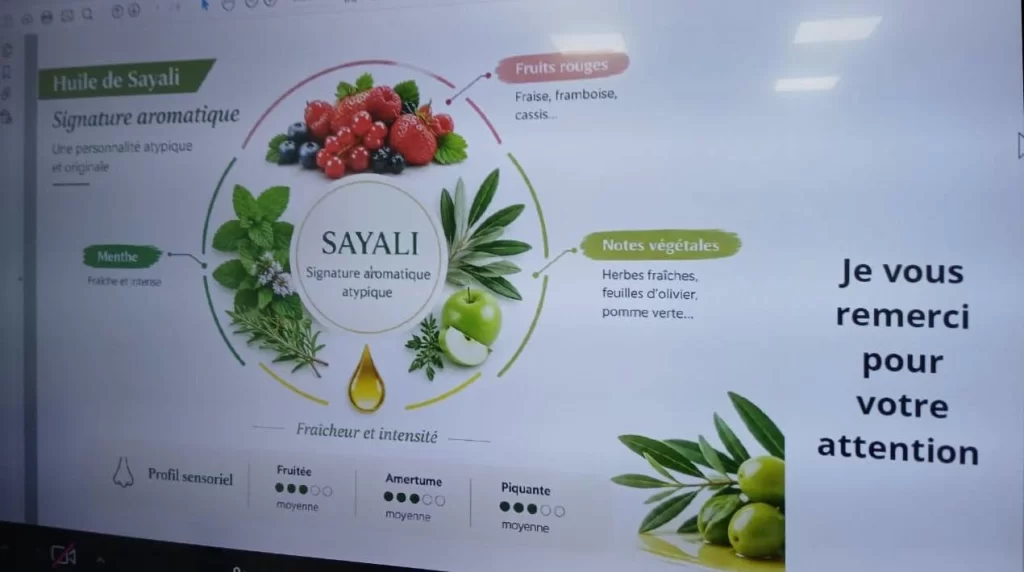
The Sensory Evaluation Team of the Libyan Laboratory for Olive Oil Quality Assessment, affiliated with the Libyan Biotechnology Research Centre (LBRC), participated in the 7th workshop for the International Olive Council ,which was held from 22 to 24 September 2026, and titled “Harmonization of Sensory Evaluation Standards among Accredited Laboratories “

More than 140 laboratories around the world participated in the workshop, in addition to sensory evaluation experts from Spain, Italy, Tunisia, Greece, Turkey, and Portugal.

The team evaluated 20 out of 24 samples by using a specific team password and an electronic platform for recording the evaluation results.

In addition, the team attended lectures and involved in discussion sessions regarding sensory and chemical characteristics for global olive oil varieties.

The participation represents a practical application of the sensory evaluation standards approved by the International Olive Council and it is part of the efforts made for harmonizing of sensory evaluation standards among laboratories accredited by the Council.

Immunohistochemistry (IHC) From Staining to Interpretation of Results

Today, Wednesday, September 2, 2026, the practical component of the specialized training course in Immunohistochemistry (IHC) was continued at the Center, focusing on the microscopic examination and interpretation of immunohistochemical results.

The practical session focused on stained tissue sections obtained from colorectal cancer specimens, with particular emphasis on evaluating the presence of immunoreactive signals, their cellular and tissue localization, the percentage of positive cells, staining intensity, and the distribution pattern of the immunoreactivity.

The training also included the assessment of staining quality and the differentiation of specific immunoreactivity from nonspecific background staining.

Furthermore, the session addressed the interpretation of immunohistochemical expression patterns of protein biomarkers in conjunction with the morphological features of the tissue.

Particular attention was given to correlating the characteristics of the immunohistochemical signal with the proportion of reactive cells, their cellular localization, and spatial distribution, while taking into consideration the appropriate positive and negative controls before accepting and validating the results.

The significance of this stage lies in transforming microscopic observations into interpretable immunohistochemical findings that can be further analyzed and compared according to the nature of the biomarker and the scoring system or assessment criteria applied.

This practical approach supports the application of IHC in histopathological studies and cancer-related research, particularly in the evaluation of tissue biomarkers and their patterns of expression.

This practical training provides participants with a solid foundation in the analysis of immunohistochemical signals, their correlation with the histological context, and the interpretation of results according to appropriate scientific and research-based criteria.

Immunohistochemistry (IHC) From Principles to Practice

  1. On Sunday, August 30, 2026, the first lecture of the specialized training course on Immunohistochemistry (IHC) was held at the Libyan Biotechnology Research Center.

The course was organized by the Scientific Department for Human Cell and Tissue Research under the supervision of Professor Adam Ibrahim Al-Zagheid, General Director of the Centre.

Professor Adam Ibrahim Al-Zagheid delivered the lecture, addressing the immunological and molecular principles underlying IHC, as well as the mechanisms used to detect protein markers within cells and tissues.

The lecture focused on the principle of specific antibody–target antigen binding, the mechanisms involved in generating and detecting immunohistochemical signals within tissue sections, and the diagnostic and research applications of the technique in characterizing cellular and tissue alterations.

The practical component of the program extends to sample processing, tissue preparation, immunostaining procedures, microscopic examination, assessment of signal intensity and distribution, analysis of immunoreactivity patterns, and interpretation of results.

From Publication to Impact in Scientific Research

On Wednesday, August 26, 2026, the Center organized a scientific seminar delivered by Professor Abdulbasit Bouhamida from the Institute of Medical Genomics at King Abdulaziz University in Jeddah, Saudi Arabia, entitled:

“Why Call for the Establishment of a Research, Development, and Innovation Institution?”

The seminar addressed the transition from scientific publication to research impact, highlighting the role of institutional infrastructure in managing research and development (R&D), facilitating knowledge transfer, and directing research outcomes toward practical applications.

The discussion focused on aligning scientific research with applied needs and priorities, developing solutions, validating their feasibility and applicability, and measuring their scientific, technological, economic, and societal impact.

The seminar also examined the development of a research ecosystem that connects scientific output with relevant beneficiary sectors and establishes clear pathways for knowledge transfer and the effective utilization of research outcomes.

The seminar was attended by department heads and directors of relevant departments involved in the Center’s research and development ecosystem. Discussions focused on managing the R&D lifecycle and transforming its outputs into measurable and applicable solutions.

The seminar forms part of the Center’s efforts to develop research performance evaluation criteria so that assessment extends beyond the number of publications to encompass the quality of research outputs, their potential for knowledge transfer and application, and the measurement of their impact.

Visit of a World Health Organization Delegation to the Libyan Biotechnology Research Center

The Libyan Biotechnology Research Center received on Wednesday, July 29, 2026, a delegation from the World Health Organization (WHO) Regional Office, accompanied by experts from the WHO office in Libya, through the National Centre for Disease Control.

The delegation was received by Prof. Dr. Adam Ibrahim Elzagheid, Director General of the Center, along with his Deputy and the Director of the Scientific Research and Studies Department.

The visit included a tour of the specialized laboratories, during which the delegation was briefed on the research infrastructure and advanced techniques used in molecular diagnostics and microbiology.

Both sides discussed prospects for technical cooperation in epidemiological surveillance, specialized laboratory diagnostics, and national capacity building, contributing to enhancing the Libyan health system’s readiness to respond to epidemics and health risks in accordance with international standards.